 Click main image to view in full screen. Unlock all 18 preview images:
Online Payments Platform – 5 Year Financial Model – Excel XLSX
Excel (XLSX)


BENEFITS OF THIS DOWNLOADABLE EXCEL DOCUMENT
- Presents a business scenario of a startup Online Payments Platform providing internet-based payment methods to business and personal accounts.
ECOMMERCE EXCEL DESCRIPTION
Financial technology (better known as fintech) is used to describe new technology that seeks to improve and automate the delivery and use of financial services. At its core, fintech is utilized to help companies, business owners, and consumers better manage their financial operations, processes, and lives. It is composed of specialized software and algorithms that are used on computers and smartphones. Fintech covers a wide range of use cases across business-to-business (B2B), business-to-consumer (B2C), and peer-to-peer (P2P) markets. One example of a fintech type company is an online (digital) payment platform, which is the business scenario analyzed in this financial model.
The model presents an advanced 5-year financial plan for a two-sided startup business model where company makes money from both merchants and consumers. The platform generates revenue from merchants primarily by charging fees for completing their payment transactions and other payment-related services. It also makes money from consumers on fees charged for foreign currency conversion and instant transfers from their platform account to their debit card or bank account. Other sources of revenue include interest, other revenue from credit product programs and other miscellaneous fees.
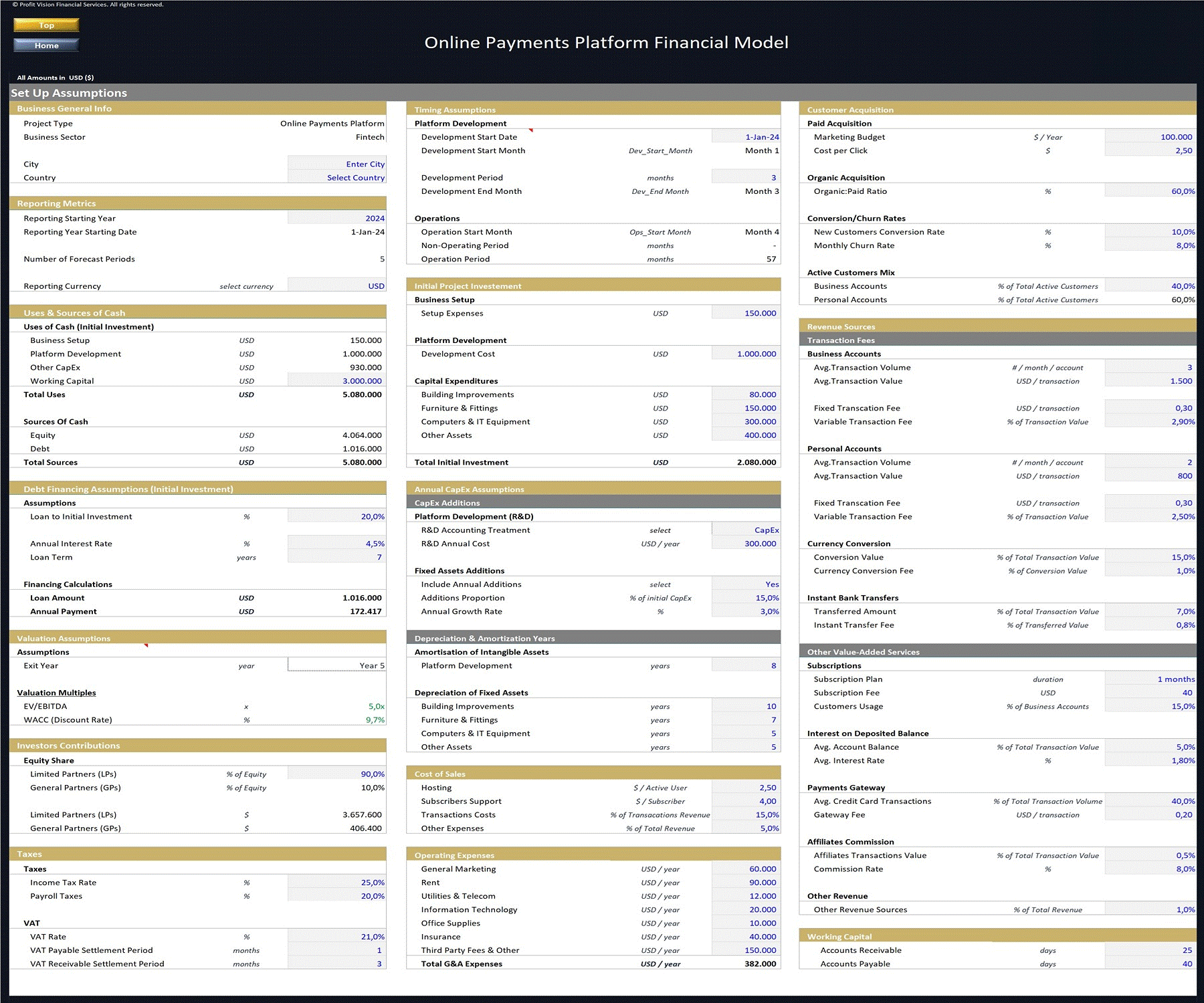
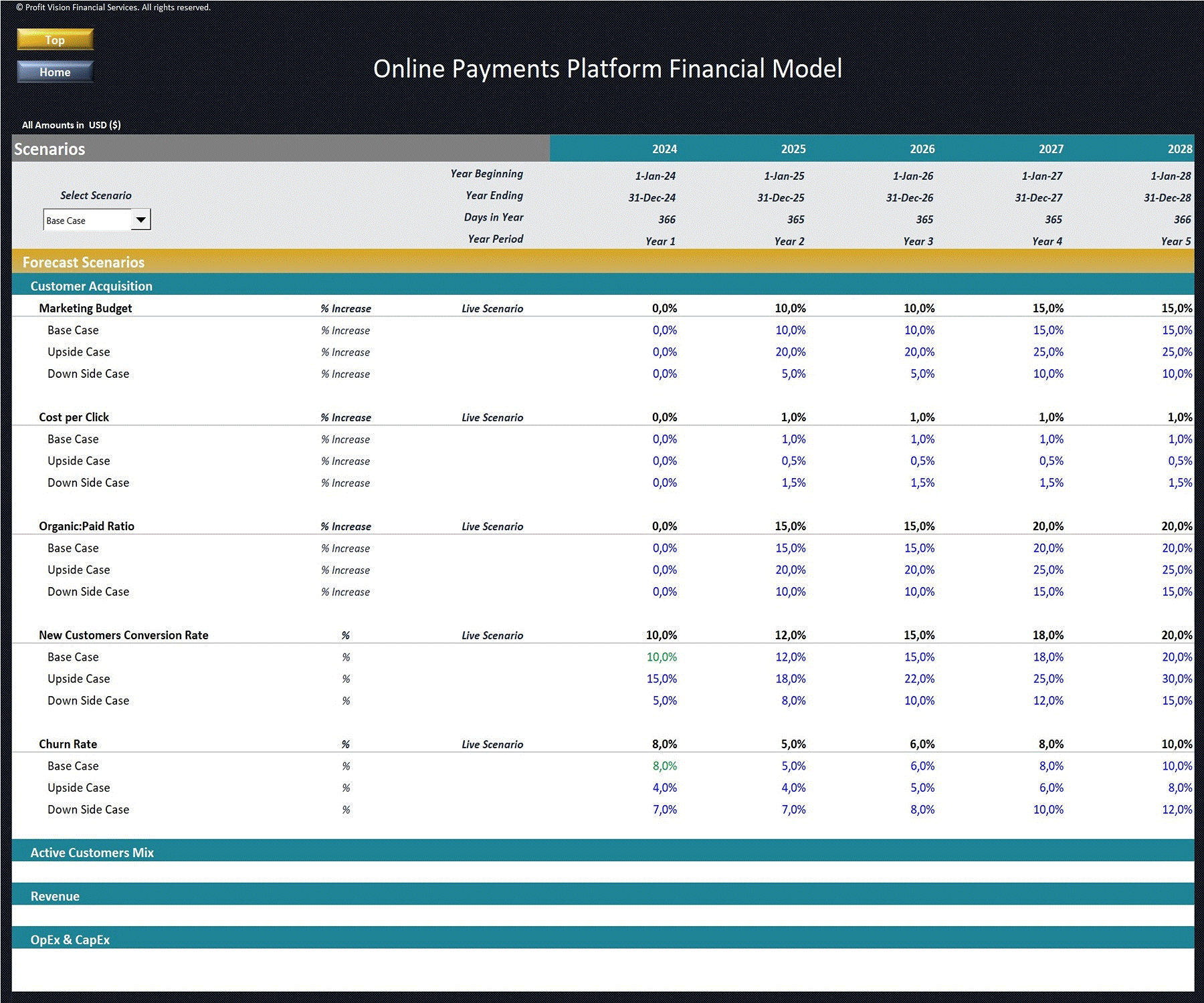
This Financial model is a flexible tool for business owners to forecast their financial and operational activities and project their returns on investment and includes assumptions and calculations of Platform Development, Customer Acquisition through Paid and Organic Marketing, Revenue assumptions for Business and Personal Accounts, Payroll, Cost of Sales & Operating Expenses, Fixed Assets & Depreciation, Financing through Debt & Equity and Exit Valuation assumptions in case of a potential sale of the business.
The structure of the template follows Financial Modeling Best Practices principles and is fully customizable.
Detailed instructions for the functionality of the model are included in the Excel file.
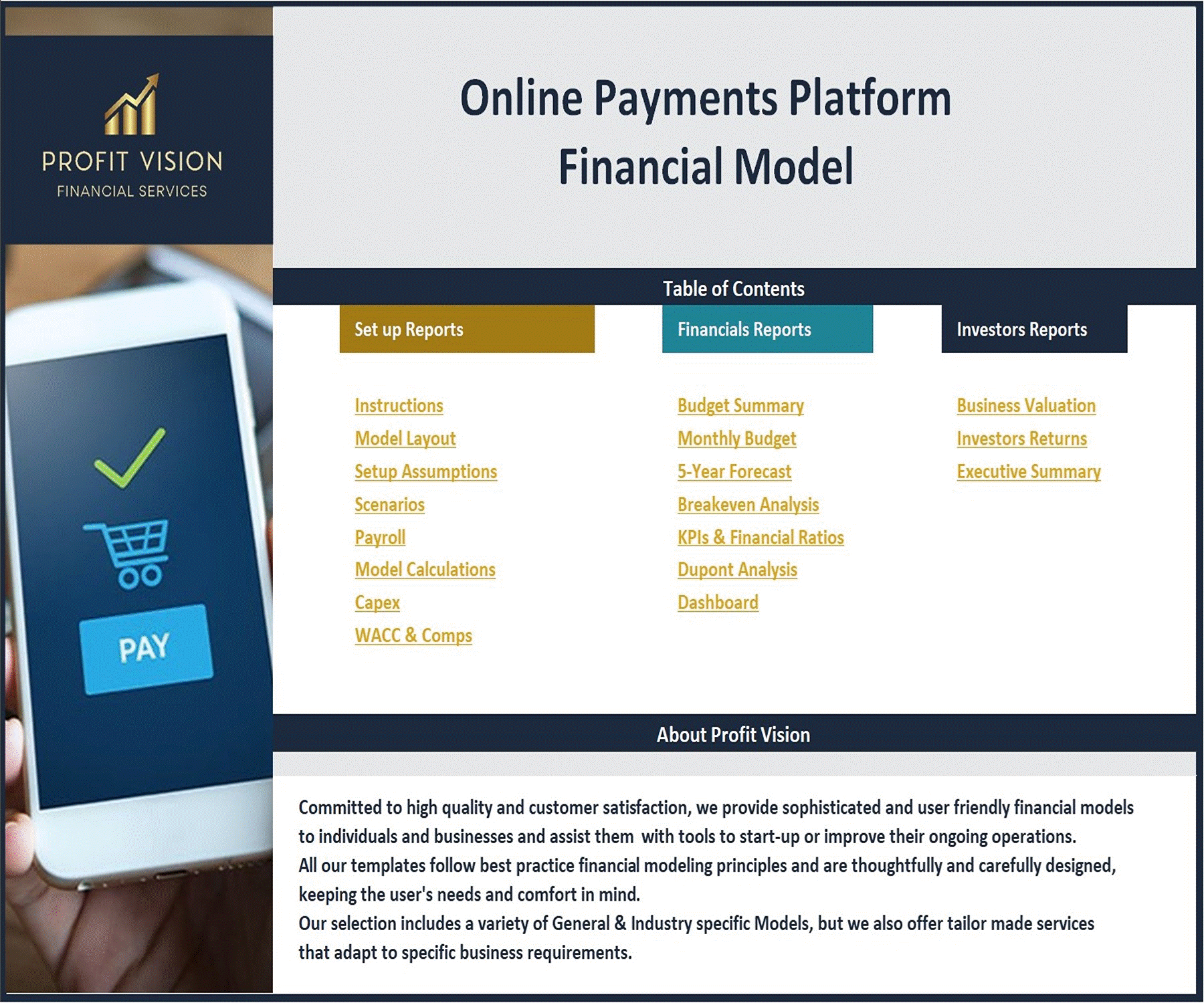
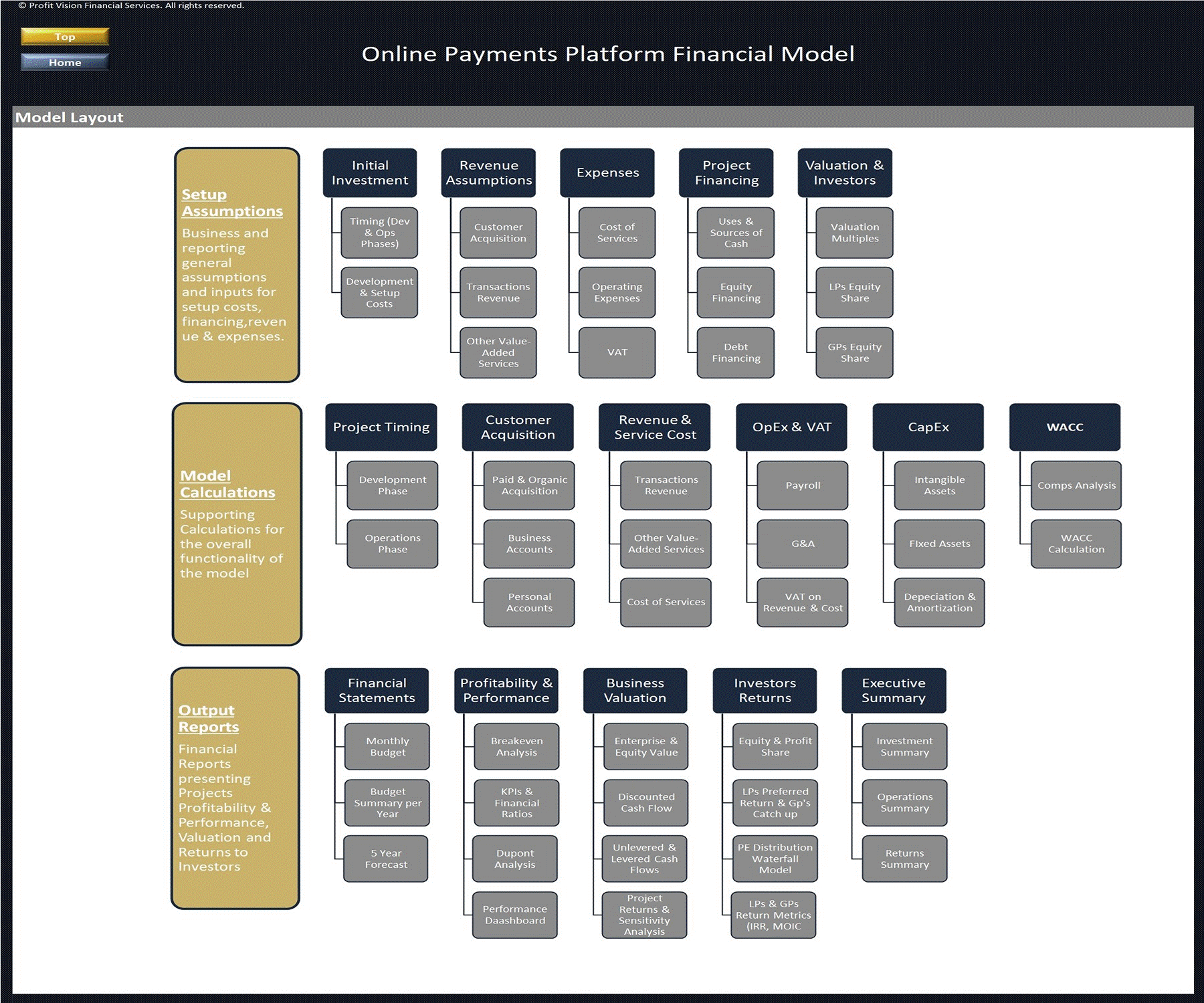
Model Inputs and Setup Reports:
• General Setup Assumptions, incl. Platform Development & Company Setup Costs, Customer Acquisition, Sources of Revenue & Cost of Sales and Financing (Debt & Equity)
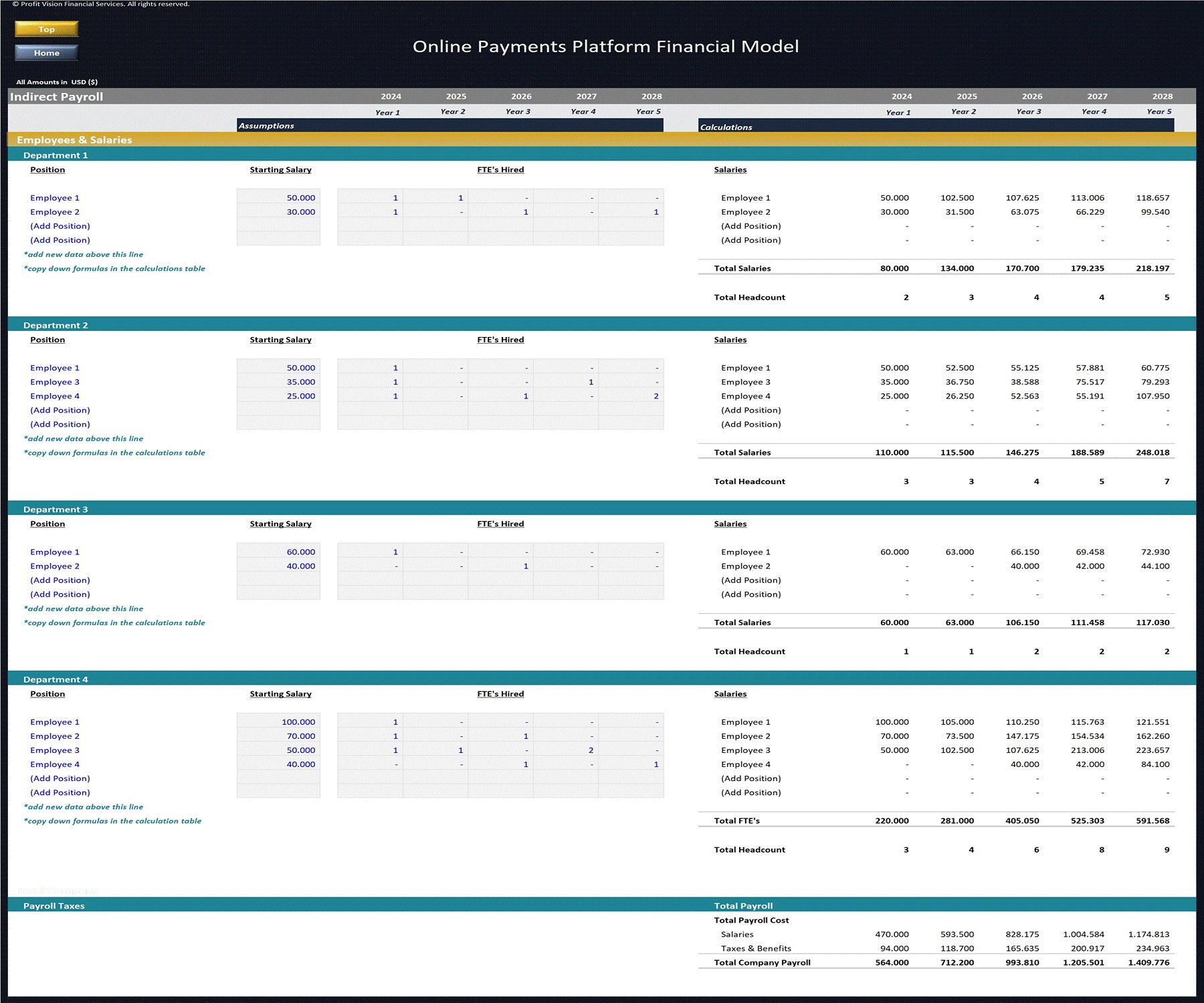
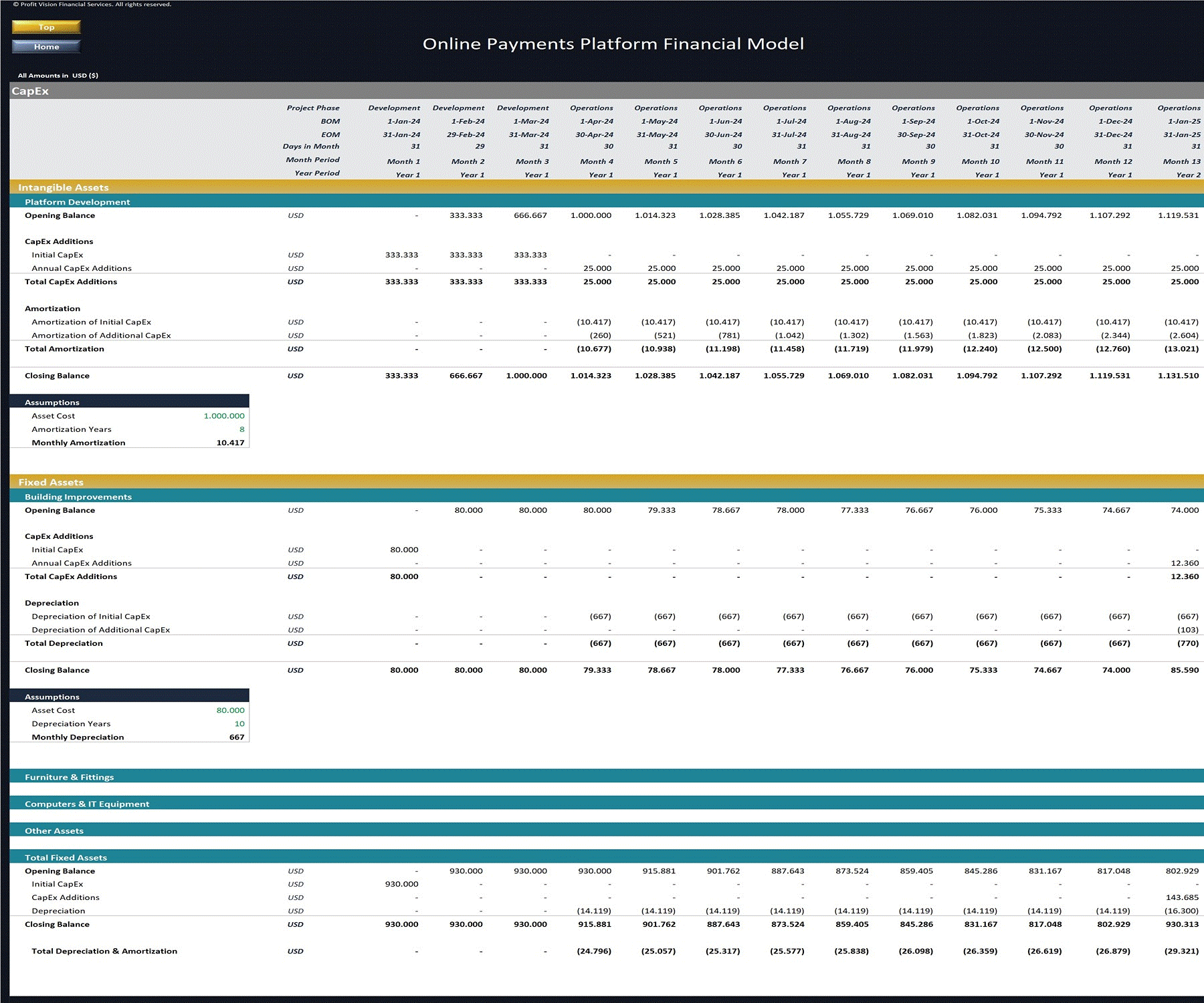
• Payroll, OpEx, VAT and Annual Capex, incl. Depreciation Schedule
• Model Supporting Calculations incl. Total Active Accounts, Transactions Volume, Revenue & Service Related Costs, OpEX, etc.
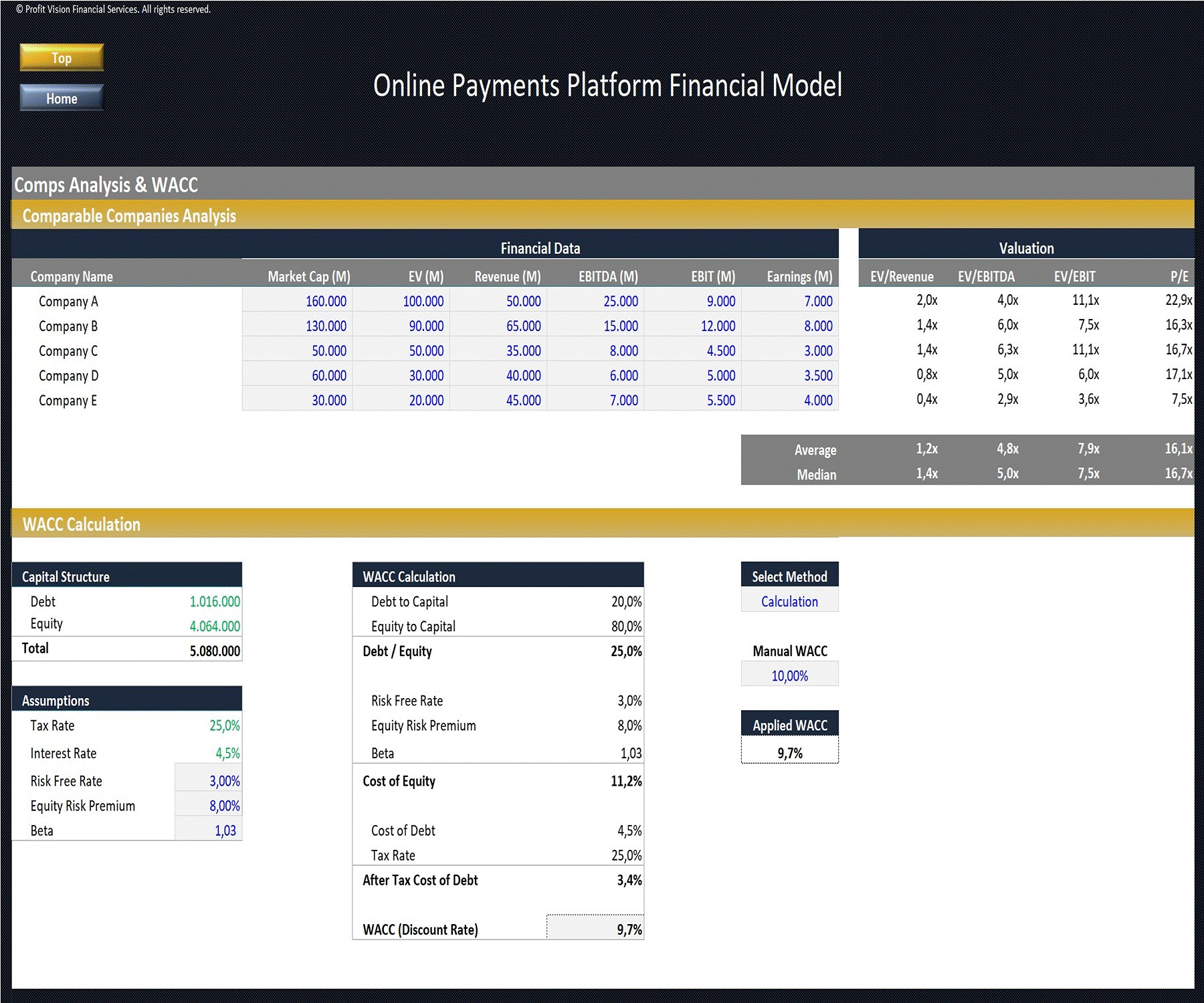
• WACC Calculation & Comparable Companies Valuation Analysis
Output Reports:
• 5-Year Monthly Budget Analysis and Monthly Budget Summary per Year
• 5-Year Annual Financial Statements (3 Statement model)
• Break-Even Analysis
• KPIs & Financial Ratios, including several Profitability, Efficiency, Liquidity, and Leverage (Solvency) Ratios
• Dupont Analysis
• Performance Dashboard
• Business Valuation, including DCF Model, Return Metrics (NPV, EV, IRR, MOIC, Payback, etc.), and Sensitivity Analysis
• Investors Returns Waterfall Model
• Professional Executive Summary
Help & Support
Committed to high quality and customer satisfaction, all our templates follow best-practice financial modeling principles and are thoughtfully and carefully designed, keeping the user's needs and comfort in mind.
Whether you have no experience or are well-versed in finance, accounting, and the use of Microsoft Excel, our professional financial models are the right tools to boost your business operations!
If you experience any difficulty while using this template and cannot find the appropriate guidance in the provided instructions, please feel free to contact us for assistance.
If you need a template customized for your business requirements, please e-mail us and provide a brief explanation of your specific needs.
Got a question about the product? Email us at support@flevy.com or ask the author directly by using the "Ask the Author a Question" form. If you cannot view the preview above this document description, go here to view the large preview instead.
TOPIC FAQ
What revenue streams should I include when modeling an online payments platform?
Key revenue streams for an online payments platform typically include merchant transaction fees and fees for payment-related services, consumer fees for foreign currency conversion and instant transfers, interest income, credit-product program revenue, and miscellaneous fees. A model should explicitly forecast merchant fees and FX/instant-transfer fees.How do I forecast transaction volume and active accounts for a payments startup?
Forecasts should link customer acquisition assumptions (paid and organic) to growth in Total Active Accounts, then convert accounts to Transactions Volume using assumed transactions per account. Use supporting calculations that model acquisition spend, conversion rates, and churn to produce Total Active Accounts and Transactions Volume.Which financial statements and reports are essential for a 5-year fintech forecast?
Essential outputs include integrated 3-statement financials (income statement, balance sheet, cash flow), monthly budget analysis and annual summaries, break-even analysis, KPIs and financial ratios, Dupont analysis, a performance dashboard, and a business valuation with DCF and sensitivity analysis, starting with a 5-year horizon.What valuation methods are appropriate for an online payments business raising capital?
Common approaches are discounted cash flow (DCF) valuation and comparable companies analysis, supplemented by return metrics such as NPV, EV, IRR, MOIC, and payback. An investors returns waterfall can model stakeholder returns under different exit scenarios using DCF and comparable-company inputs.How should I choose a financial model template for a two-sided payments marketplace on a limited timeline?
Select a template that includes platform development and setup costs, detailed customer acquisition inputs (paid and organic), revenue and cost-of-sales modeling for both merchant and consumer segments, financing (debt & equity) assumptions, and valuation outputs like DCF. Flevy's Online Payments Platform – 5 Year Financial Model contains these components including Platform Development and Customer Acquisition assumptions.What features in a pre-built fintech model reduce manual work versus building from scratch?
Useful pre-built features include automated supporting calculations for active accounts and transactions, payroll and OpEx schedules, VAT and depreciation, WACC and comparable comps, integrated 3-statement logic, sensitivity analysis, and an Investors Returns Waterfall Model to assess returns, which reduce manual linkage work.What financial outputs should I prepare for a seed investor pitch for a payments startup?
Investors expect a 5-year pro forma with annual financial statements, a monthly budget summary for early years, KPIs and financial ratios demonstrating unit economics and liquidity, a DCF-based valuation with sensitivity analysis, and a concise executive summary—starting with 5-year annual financial statements and KPIs.How can I model CAC and payback for merchant versus consumer segments?
Build separate customer acquisition assumptions for merchant and consumer cohorts (paid and organic channels), estimate revenue per account and transactions, allocate service-related costs, and run monthly budget outputs to calculate CAC and payback periods using the model’s Total Active Accounts and monthly budget analysis.Source: Best Practices in Ecommerce, Integrated Financial Model Excel: Online Payments Platform – 5 Year Financial Model Excel (XLSX) Spreadsheet, Profit Vision
ABOUT THE AUTHOR

Profit Vision provides Consulting & Outsourced Financial Services as well as Financial Planning & Performance analysis to small and mid-size businesses by implementing efficient and effective tools to assist them with start-up business plans or improve their ongoing operations.
Our range of services include Financial & Operational Analysis, Business Planning, Budgeting & Forecasting, Cash Flow
... [read more]
Ask the Author a Question
You must be logged in to contact the author.




























